Introduction
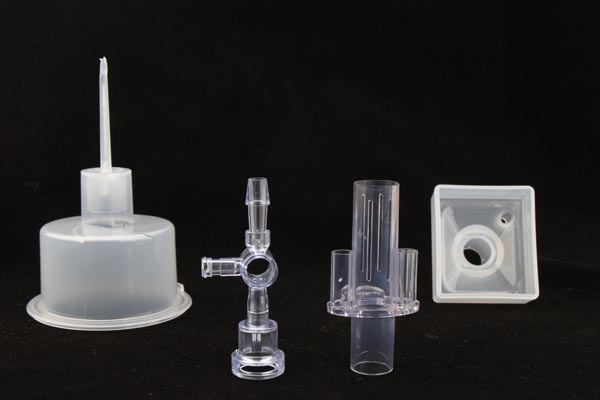
In the medical industry, injection-molded parts are crucial components of medical devices. Their dimensional accuracy directly affects the performance, safety, and reliability of the products. Excessive dimensional deviation of medical injection-molded parts can not only prevent the products from being assembled properly but also impact their functional realization and even pose potential threats to patients' health. Therefore, when encountering the problem of large dimensional deviation in medical injection-molded parts, scientific and effective measures must be taken to solve it.
Analysis of the Causes of Dimensional Deviation
Mold Factors
-
Unreasonable Mold Design: Defects in the mold cavity size, runner design, and cooling system layout can lead to uneven flow and cooling of the plastic in the mold, resulting in dimensional deviation. For example, an oversized or undersized cavity size can make the injection-molded part exceed the tolerance range after molding.
-
Mold Wear: After long-term use, key parts of the mold such as the cavity and core will wear out, causing dimensional changes. Especially for mold materials with lower hardness, the wear phenomenon is more obvious.
-
Mold Manufacturing Accuracy: Insufficient machining accuracy during mold manufacturing can also lead to dimensional deviation. Factors such as the accuracy of the machining equipment and the selection of the machining process will affect the dimensional accuracy of the mold.
Raw Material Factors
-
Unstable Plastic Properties: Different batches or suppliers of plastic raw materials may have differences in properties such as shrinkage and fluidity. If plastics with unstable properties are used, it is difficult to control the dimensions of the injection-molded parts.
-
Raw Material Moisture Absorption: If plastic raw materials absorb moisture during storage, the water will vaporize during the injection molding process, causing bubbles inside the injection-molded parts and thus affecting dimensional accuracy.
Injection Molding Process Factors
-
Improper Temperature Control: The barrel temperature and mold temperature of the injection molding machine have a significant impact on the fluidity and shrinkage of the plastic. Improper temperatures, either too high or too low, can lead to dimensional deviation of the injection-molded parts. For example, an excessively high barrel temperature can enhance the fluidity of the plastic, potentially causing flash on the injection-molded parts; an excessively low mold temperature can make the plastic cool too quickly, resulting in uneven shrinkage.
-
Improper Pressure Control: Parameters such as injection pressure and holding pressure also affect the dimensions of the injection-molded parts. Insufficient injection pressure can lead to incomplete filling of the plastic, making the injection-molded parts undersized; unstable holding pressure can cause inconsistent shrinkage of the injection-molded parts during cooling, resulting in dimensional deviation.
-
Improper Injection Speed: An excessively fast or slow injection speed can affect the flow and filling of the plastic in the mold, thus affecting dimensional accuracy. An excessively fast injection speed can cause turbulence of the plastic in the cavity, forming weld lines; an excessively slow injection speed can make the plastic cool too early and fail to fully fill the cavity.
Environmental Factors
-
Temperature and Humidity Changes: Changes in the temperature and humidity of the production workshop can affect the shrinkage of the plastic and the dimensions of the mold. For example, in a high-temperature environment, the shrinkage of the plastic will increase, making the injection-molded parts undersized; humidity changes can cause slight deformation of the mold, affecting dimensional accuracy.
-
Vibration and Impact: Vibration and impact during the production process may cause slight displacement or deformation of the mold, leading to dimensional deviation of the injection-molded parts.
Measures to Solve the Dimensional Deviation Problem
Optimize Mold Design
-
Reasonable Mold Structure Design: According to the shape and dimensional requirements of the product, optimize the mold cavity size, runner design, and cooling system layout. Use advanced mold design software for simulation analysis to ensure the rationality and scientificity of the mold design.
-
Improve Mold Manufacturing Accuracy: Select high-precision machining equipment and processes, and strictly follow the design requirements for mold manufacturing. Strengthen quality inspection during the mold manufacturing process to ensure that the dimensional accuracy of the mold meets the requirements.
-
Regular Mold Maintenance and Upkeep: Establish a complete mold maintenance and upkeep system, regularly inspect, clean, and lubricate the mold. Promptly repair or replace severely worn mold components to ensure the normal use of the mold.
Strictly Control Raw Material Quality
-
Select High-quality Plastic Raw Materials: Choose plastic raw material suppliers with stable performance and reliable quality, and conduct strict inspection and testing on each batch of raw materials. Ensure that the shrinkage, fluidity, and other properties of the raw materials meet the product requirements.
-
Proper Raw Material Storage and Management: Store plastic raw materials in a dry and well-ventilated warehouse to prevent moisture absorption. For plastic raw materials that are prone to moisture absorption, sealed packaging or the addition of desiccants can be used for storage.
Optimize Injection Molding Process Parameters
-
Precise Temperature Control: According to the properties of the plastic and the product requirements, precisely set the barrel temperature and mold temperature of the injection molding machine. Monitor temperature changes in real-time during the production process and adjust temperature parameters in a timely manner to ensure that the temperature remains within a reasonable range.
-
Reasonable Pressure Parameter Settings: According to the size and shape of the product, reasonably set the injection pressure and holding pressure. While ensuring that the plastic fully fills the cavity, try to reduce the injection pressure as much as possible to reduce the occurrence of flash. At the same time, maintain stable holding pressure to ensure uniform shrinkage of the injection-molded parts during cooling.
-
Adjust Injection Speed: According to the fluidity of the plastic and the structural characteristics of the product, adjust the injection speed. For products with complex structures and thin walls, a relatively fast injection speed can be used; for products with simple structures and thick walls, a relatively slow injection speed can be used.
Improve the Production Environment
-
Control Workshop Temperature and Humidity: Install air conditioners and dehumidifiers in the production workshop to control the temperature and humidity within an appropriate range. Generally, the workshop temperature should be kept at 20 - 25°C, and the humidity should be kept at 40% - 60%.
-
Reduce Vibration and Impact: Regularly maintain and upkeep the production equipment to ensure its stable operation. Adopt shock absorption measures during equipment installation to reduce the impact of vibration and impact on the mold.
Strengthen Quality Inspection and Monitoring
-
Establish a Complete Quality Inspection System: Formulate strict quality inspection standards and procedures, and conduct comprehensive dimensional inspection on injection-molded parts. Use advanced inspection equipment such as coordinate measuring machines and projectors to ensure the accuracy and reliability of the inspection results.
-
Implement Process Monitoring: Monitor the injection molding process parameters and product quality in real-time during the production process. Through a data acquisition and analysis system, promptly detect trends and causes of dimensional deviation and take corresponding adjustment measures.
Conclusion
The large dimensional deviation of medical injection-molded parts is a complex problem involving multiple aspects such as mold design, raw material quality, injection molding process, and production environment. To solve this problem, comprehensive measures need to be taken from multiple perspectives. By optimizing mold design, strictly controlling raw material quality, optimizing injection molding process parameters, improving the production environment, and strengthening quality inspection and monitoring, the dimensional accuracy of medical injection-molded parts can be effectively improved, ensuring product quality and safety. At the same time, enterprises should also continuously strengthen technological innovation and management innovation to improve their core competitiveness and meet the continuously developing needs of the medical industry.






 Home
Home