

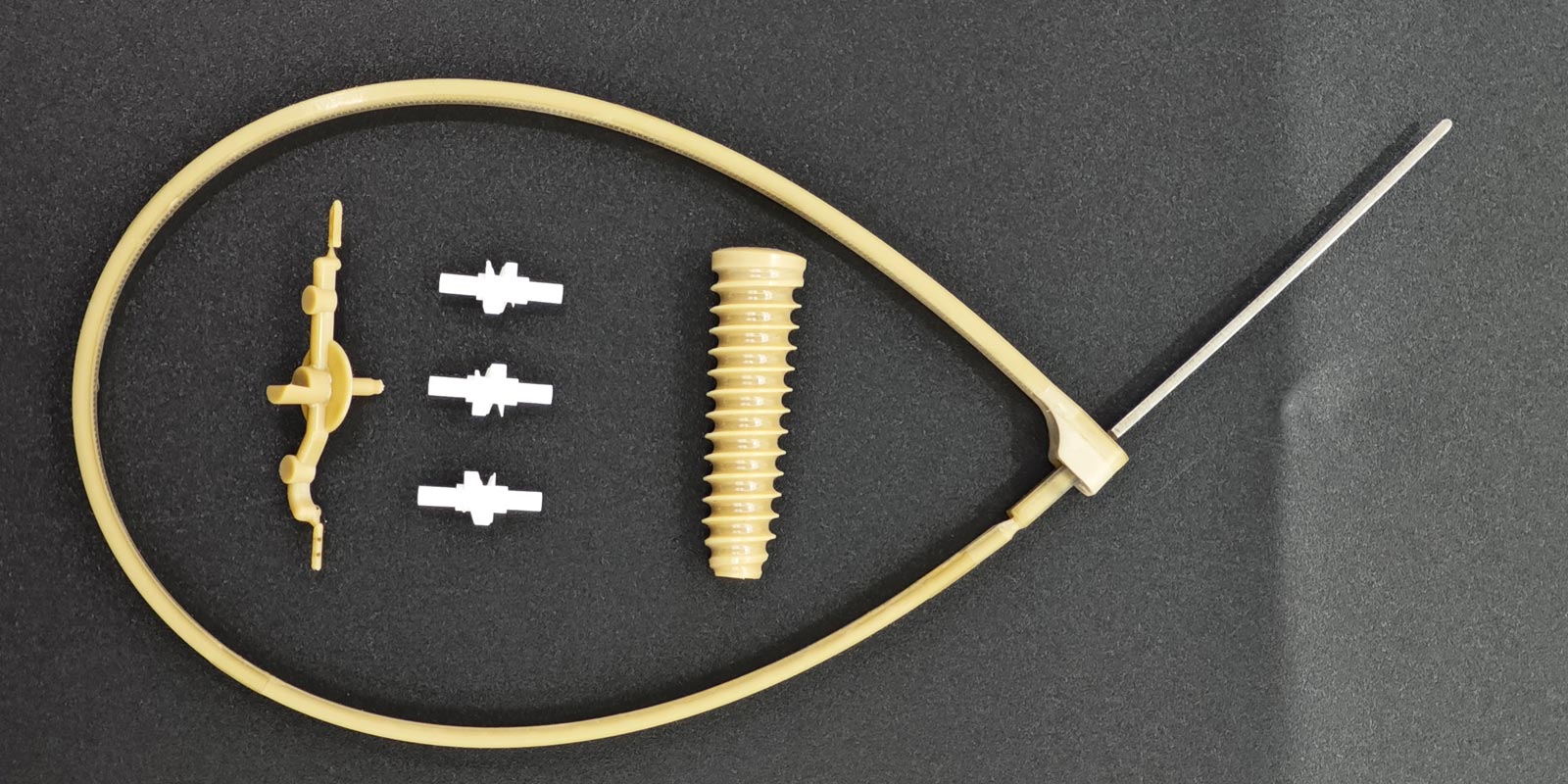
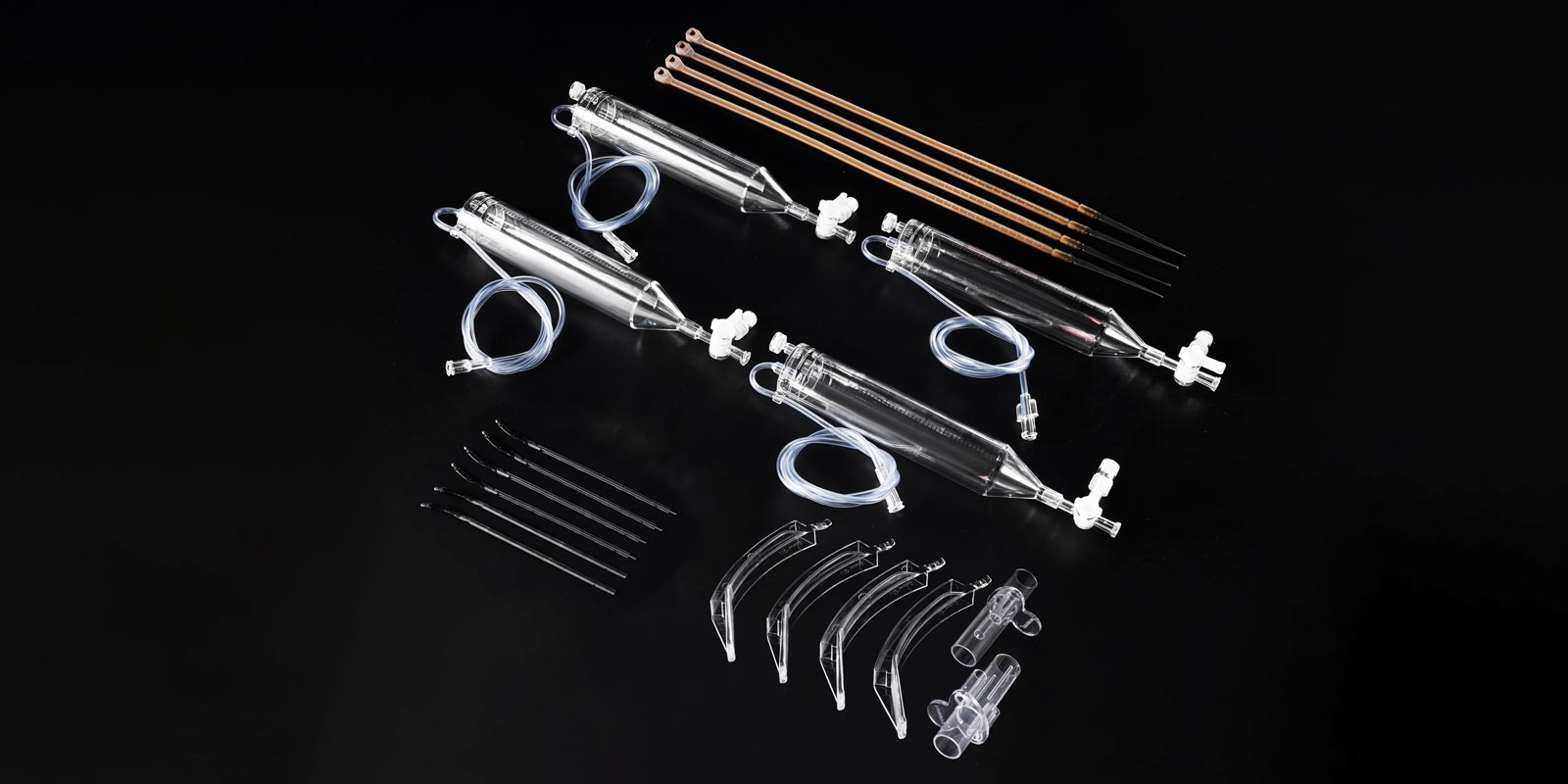
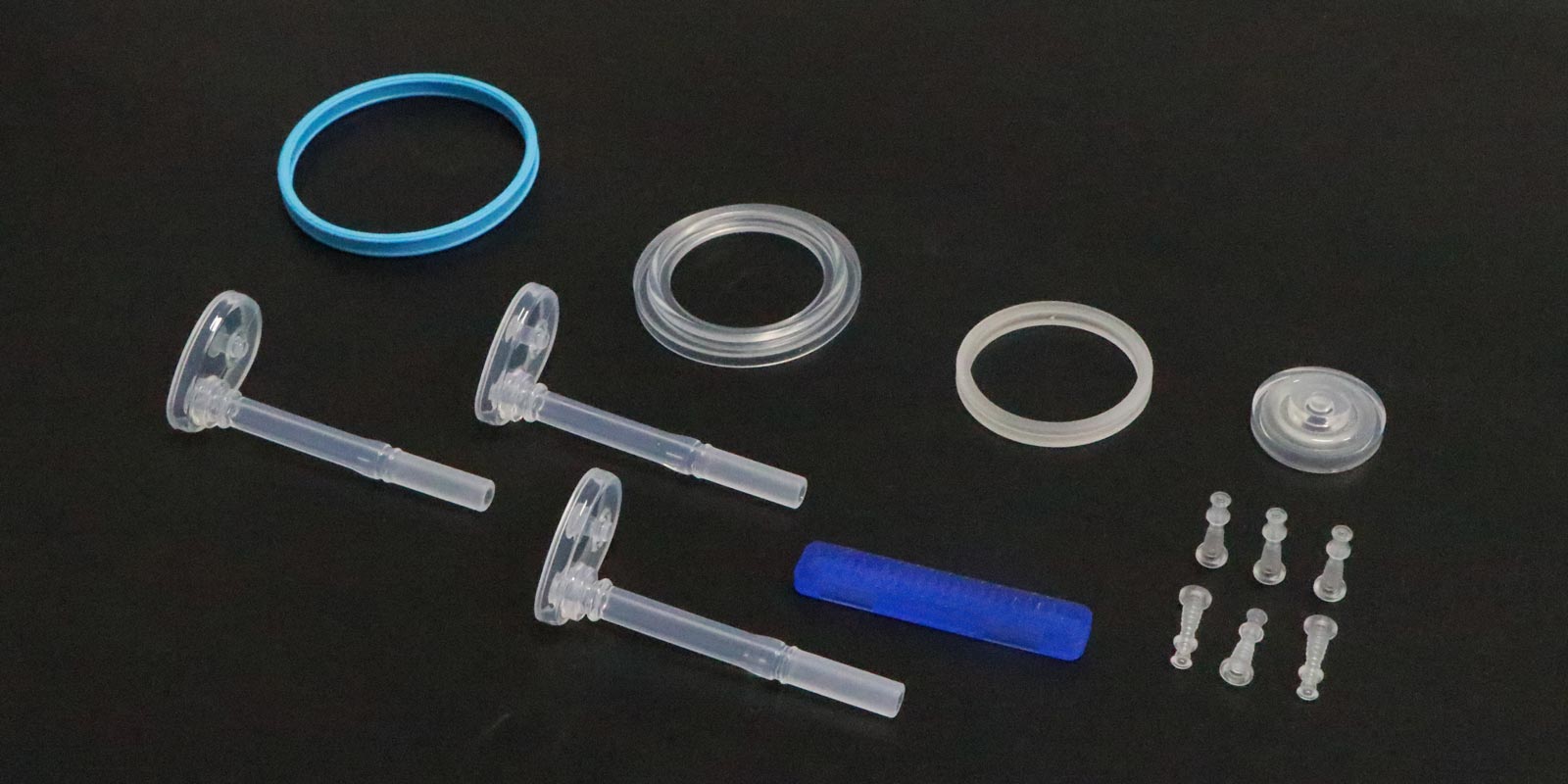



In the field of medical mold manufacturing, thread machining is far more than simply "cutting a spiral groove." It refers to a series of precision manufacturing processes—including turning, milling, grinding, tapping, die cutting, lapping, and rolling—used to produce continuous spiral ridges or grooves with specific cross-sectional profiles on the cylindrical or conical surfaces of medical device components.
In short: thread machining is the core process that ensures every screw and every screwed connection on a medical device fits together perfectly and engages precisely.
Threads are classified by parent shape into cylindrical and conical threads; by position into external and internal threads; and by tooth profile into triangular, rectangular, trapezoidal, sawtooth, and special-shaped threads. In medical mold processing, the most commonly involved type is the triangular external thread, because the connection and fastening of medical devices overwhelmingly rely on this tooth profile.
The main machining methods cover seven categories:
Turning—The workpiece rotates one revolution while the tool moves axially by exactly one lead. This is the most common method for single-piece and small-batch production. Ordinary lathe thread machining generally achieves only class 8 to 9 lead accuracy.
Milling—Uses disc-shaped or comb-shaped cutters. The workpiece needs to rotate only 1.25 to 1.5 revolutions to complete the thread, offering very high productivity. Lead accuracy can reach class 8 to 9, with surface roughness of Ra 5 to 0.63 micrometers.
Grinding—Specifically used for precision thread machining of hardened workpieces. Single-rib grinding wheel machining can achieve lead accuracy of class 5 to 6, with surface roughness of Ra 1.25 to 0.08 micrometers.
Tapping and Die Cutting—A tap is screwed into a pre-drilled hole to machine internal threads; a die cuts external threads on bar stock. Machining accuracy depends on the precision of the tool itself.
Lapping—Uses a thread lapping tool made of soft materials such as cast iron to rotate back and forth over already-machined threads, eliminating lead errors. This method is commonly used for hardened internal threads.
Rolling—Uses a forming rolling die to plastically deform the workpiece and obtain threads. Suitable for mass-produced standard fastener external threads, thread accuracy can reach class 2, but the material hardness must not exceed HRC 40.
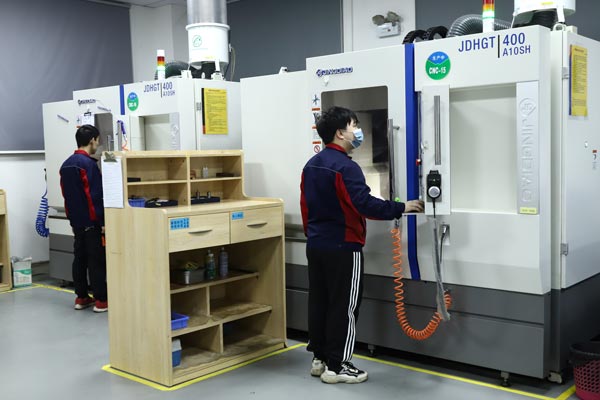
Medical devices are fundamentally different from ordinary mechanical parts. They come into direct contact with the human body, and the requirements for precision, cleanliness, and reliability are almost unforgiving.
First, the materials are special. Medical screws are mostly made from 1Cr18Ni9Ti stainless steel, which has high strength, high plasticity, and severe work hardening. During cutting, the tool bears large resistance forces, screws deform easily, and cutting edges tend to form built-up edges. This material does not bond easily, so tool inserts with excellent heat resistance, wear resistance, and thermal conductivity must be selected, combined with water-based cutting fluid for adequate cooling.
Second, the rigidity is extremely poor. Taking an M6-2.5mm×55mm medical screw as an example, the outer diameter is only 6mm, but the lead reaches 2.5mm, giving a length-to-diameter ratio exceeding 9:1. The lead is very large relative to the diameter, and the workpiece rigidity is extremely poor. When using a forming tool, the cutting resistance increases sharply with cutting depth, easily causing vibration, deformation, or even bending and breakage.
Third, the accuracy requirements are extremely high. Medical threads primarily serve to achieve the correct tightness and smoothness of threaded connections. The dimensional accuracy of the thread teeth must be extremely high, and the consistency of thread shank machining is also very strict. The 6mm outer diameter dimension must be controlled within approximately 0.04mm—once this tolerance is exceeded, the fit between the support fixture and the screw outer diameter degrades, and problems will inevitably occur during turning.
Fourth, the dilemma of small-batch production. Ordinary wood screws can be cold-extruded, which is low-cost and highly efficient. However, medical stainless steel screws, due to their material, small batch sizes, and the need to make dedicated tooling, can basically not be cold-extruded on dedicated machines. They can only be machined one by one on CNC machines.
Facing the above challenges, the industry has developed a mature process route:
Dedicated support fixture holds the workpiece throughout. A Morse No. 5 taper tailstock support fixture is designed, with a support sleeve embedded inside, so the screw is stably supported throughout the thread turning process. The cutting resistance is essentially offset, completely solving the deformation problem caused by insufficient rigidity.
Macro program layered cutting. A FANUC system CNC macro program is written. The tool determines one point on the thread profile at a time, moves one lead, and feeds in layers. The contact area between the tool and the workpiece remains basically constant, so the cutting resistance does not increase with cutting depth, significantly reducing cutting forces.
Coated tools with precise parameters. Tungsten carbide titanium carbide-coated 35-degree profile turning tools are selected. The reasonable spindle speed is calculated based on the blade tolerance line speed v = πDn/1000, ensuring a balance between tool life and machining quality.
Taking the M6-2.5mm×55mm medical screw as an example, the complete process flow is: two-piece linked machining, one-clamp-one-center turning of the outer diameter, removal of the process head, thread turning with support fixture and macro program, cutoff to length, and slot milling on a horizontal milling machine. Every step is interconnected, and none can be omitted.
In medical devices, threads are everywhere: the connection between screws and bone in orthopedic implants, the assembly of prosthetic joint stems, the detachable structures of surgical instruments, the sealed screw connections of infusion accessories... Every thread carries the dual mission of function and safety. For this reason, the medical industry requires thread surface roughness as low as Ra < 0.2μm and bore tolerances as tight as ±0.01mm, far exceeding ordinary machining standards.
Thread machining in medical molds is not an ordinary process—it is the lifeline that determines whether a product can be safely implanted in the human body and whether it can work stably in a sterile environment.
Q1: What is the biggest difference between medical mold thread machining and ordinary mechanical thread machining?
The biggest difference lies in the material and precision. Medical screws are mostly made from 1Cr18Ni9Ti stainless steel, which has severe work hardening and poor rigidity. The lead accuracy and surface roughness requirements are far higher than those of ordinary fasteners. Dedicated fixtures and macro program layered cutting must be used to achieve the required quality.
Q2: Why can't small-batch medical screws be produced by cold extrusion?
Cold extrusion is suitable for mass production of soft materials such as Q235A. Medical-grade stainless steel has high hardness and special plasticity, and for small-batch production, there is no need to open a mold. The tooling cost for cold extrusion far exceeds that of CNC machining, making it completely uneconomical.
Q3: How do you prevent workpiece deformation during thread machining?
The core strategy is "full-length support plus layered cutting." A dedicated support fixture holds the workpiece throughout the entire process, while a macro program performs layer-by-layer递减 cutting to keep the cutting area constant, controlling the cutting resistance within a manageable range.
Q4: How are internal threads generally machined in medical molds?
Small-diameter internal threads can only be machined by taps. During tapping, special attention must be paid to chip control. The medical industry can also use forming taps, which shape threads through plastic deformation rather than cutting, yielding higher thread strength. However, this places higher demands on machine torque and workpiece hardness.
PREV:没有了
NEXT:Differences Between Hot Runner and Cold Runner Molds in Medical Injection Molding and Selection Tips
Add: 62 Jinghai East Road, Chang'an Town, Dongguan City, Guangdong Province
Whatsapp: +86 13342659272
Email: Yuliya.chen@yizemould.com

Add: 62 Jinghai East Road, Chang'an Town, Dongguan City, Guangdong Province
Whatsapp: +86 13342659272
Email: Yuliya.chen@yizemould.com
 Home
Home