In the field of medical injection molding, demolding difficulties pose significant challenges to production efficiency, product yield, and cost control. The stringent requirements for precision, cleanliness, and material performance in medical products further amplify the complexity of demolding issues. This article systematically explores the root causes of demolding challenges from three perspectives—technical principles, process optimization, and equipment management—and provides actionable solutions for the industry.
1. Core Causes of Demolding Difficulties
-
Material-Process Conflicts: Medical-grade plastics (e.g., PPSU, PEEK, PC) exhibit high melting points and viscosity, leading to strong adhesion to mold cavities. Improper injection pressure, holding time, or cooling time settings can result in excessive filling or stress concentration, increasing demolding resistance.
-
Mold Design Flaws:
-
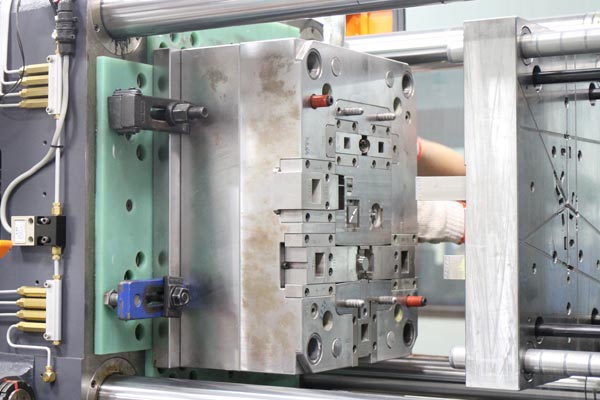
Insufficient draft angles (<0.5°) in complex medical product structures create high friction between the product and mold cores/cavities.
-
Malfunctioning venting systems cause trapped air compression, generating counterpressure that hinders separation.
-
Imbalanced ejection systems (e.g., inadequate or poorly positioned ejector pins) lead to localized stress or deformation.
-
Environmental Interference: Oil contamination, residual mold release agents, or humidity fluctuations in cleanroom environments can alter the friction coefficient between materials and molds, causing demolding failures.
2. Systematic Solutions
A. Mold Design Optimization
-
Dynamic Draft Angle Design: Adjust draft angles based on product wall thickness, material shrinkage, and structural complexity. For deep-cavity medical containers, increase core-side draft angles to 1°–1.5° while compensating with cavity-side angles of 0.8°–1°.
-
Smart Ejection Systems:
-
Use nitrogen gas springs to reduce impact forces and prevent product whitening or deformation.
-
Deploy multi-point ejector arrays optimized via Moldflow simulations for uniform force distribution.
-
Integrate vacuum suction assistance for high-precision components (e.g., microfluidic chips) to minimize mechanical contact damage.
-
Advanced Surface Treatments: Apply ultra-hard coatings (e.g., DLC) or nanoscale polishing (Ra ≤ 0.4μm) to reduce material adhesion. Strengthen high-wear areas with laser cladding for extended mold life.
B. Precision Process Control
-
Multi-Stage Cooling Strategy:
-
High-Speed Cooling (0–3s post-injection): Rapidly lower surface temperatures below the material’s glass transition temperature (Tg) to form a rigid shell.
-
Controlled Slow Cooling (3–10s): Ensure uniform core shrinkage to minimize internal stress.
-
Pre-Demolding Heating (for high-viscosity materials): Briefly raise core edge temperatures to Tg ±5°C to reduce friction.
-
Dynamic Pressure Management: Utilize servo-hydraulic systems to adjust injection pressure curves in real time. For PEEK, adopt a "high-pressure slow fill → low-pressure holding → instant pressure release" sequence to prevent overfilling.
C. Standardized Environmental Management
-
Cleanroom Mold Release Protocols: Use food-grade silicone-based release agents applied via electrostatic spraying for uniform 2–5μm coatings, avoiding residue that compromises biocompatibility.
-
IoT-Enabled Mold Maintenance: Deploy sensors to monitor mold temperature, ejection cycles, and demolding forces. AI algorithms predict wear cycles, triggering proactive maintenance when ejection forces rise by 15%.
3. Case Study: Optimizing Demolding for a Medical Catheter Connector
A PC catheter connector with a deep-cavity design suffered a 12% demolding defect rate. After implementing:
-
Increasing core draft angles to 1° and optimizing ejector pin layouts;
-
Adopting multi-stage cooling to reduce demolding temperature from 85°C to 65°C;
-
Integrating vacuum-assisted ejection.
The defect rate dropped to 0.5%, cycle time shortened by 18%, and annual cost savings exceeded $200,000.
Conclusion
Resolving demolding challenges in medical injection molding requires a holistic "design-process-environment" framework. Innovations in mold design, intelligent process control, and cleanroom management significantly enhance demolding stability, enabling high-precision, efficient production of medical devices. Future advancements in digital twin technology will further enable real-time visualization and dynamic optimization of demolding processes, driving the industry toward zero-defect manufacturing.






 Home
Home