

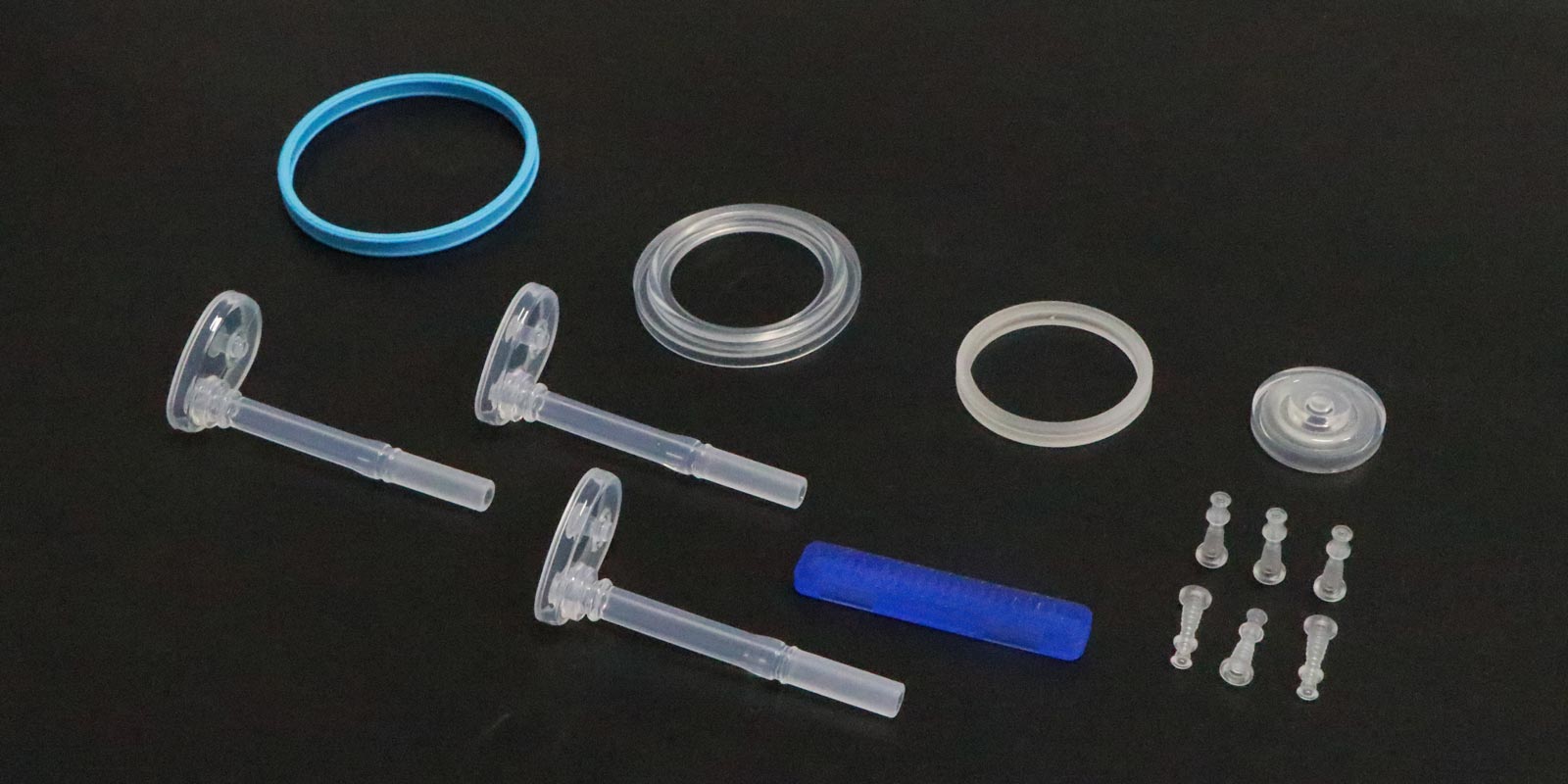



Medical injection molded parts are often exposed to ultraviolet radiation, high temperature and humidity, chemical corrosion, and other environmental factors during use. Once the weather resistance is insufficient, products will experience yellowing, embrittlement, cracking, and performance degradation, which directly affect the safety and service life of medical devices. So, what should be done when medical injection molded parts have poor weather resistance? This article provides systematic solutions from multiple dimensions including material selection, formulation optimization, process adjustment, and post-treatment.
Before looking for solutions, we need to understand the root causes of poor weather resistance. Poor weather resistance in medical injection molded parts is usually closely related to the following factors.
First, the base material itself has insufficient aging resistance. Some commonly used medical-grade plastics such as ABS, PP, and PC are prone to photo-oxidative degradation under long-term ultraviolet radiation, leading to molecular chain scission.
Second, the additive system is unreasonable. Some injection molded parts reduce or omit the addition of UV absorbers and antioxidants to cut costs during production, causing the material to age rapidly in natural environments.
Third, improper processing conditions. Excessive injection temperature or overly long residence time can cause thermal degradation of the material during processing, meaning the performance is already compromised before the product leaves the factory.
Fourth, the service environment exceeds the design tolerance of the material. For example, using indoor injection molded parts for long-term outdoor exposure will naturally accelerate aging.
The most direct and effective way to improve weather resistance is to select engineering plastics that inherently have excellent weather resistance performance. The following materials are widely used in the medical field and demonstrate outstanding weather resistance.
Polycarbonate (PC) has good impact resistance and transparency, but standard PC has average weather resistance. If used outdoors or in long-term light exposure environments, it is recommended to use weather-resistant grade PC, such as Bayer's Makrolon UV series. These materials incorporate ultraviolet-absorbing groups into the molecular structure, significantly improving anti-yellowing capability.
Among polyamides (PA), PA12 and PA612 have low moisture absorption, good dimensional stability, and relatively good weather resistance. In particular, PA12 is very mature in medical catheters, connectors, and other products.
Polyether ether ketone (PEEK) is one of the strongest materials in terms of weather resistance and chemical resistance among current medical-grade plastics. Although the cost is higher, it has an irreplaceable position in implant devices and high-end in vitro diagnostic equipment.
For budget-constrained scenarios, consider blending and modifying PP or ABS to improve weather resistance, such as a PP/EPDM blend system or an ABS/ASA blend system. The latter improves weather resistance by one order of magnitude compared to standard ABS.
If the base material is already determined and cannot be changed, then optimizing the formulation by adding functional additives is the most cost-effective solution.
Ultraviolet absorbers (UVA) are one of the most commonly used weather-resistant additives, such as benzotriazole-based and triazine-based UV absorbers. They effectively absorb ultraviolet rays in the 280 to 400 nanometer band and convert them into heat energy, thereby protecting the polymer backbone from being broken by UV light. In medical injection molded parts, it is recommended to use low-migration, low-toxicity UV absorbers to meet biocompatibility requirements.
Hindered amine light stabilizers (HALS) work even better when used in combination with UV absorbers. HALS does not absorb UV light itself but terminates the photo-oxidative chain reaction by capturing free radicals, playing a role in "repairing" micro-damage that has already occurred. Using both together achieves a synergistic effect greater than the sum of the two.
In addition, the addition of antioxidants should not be overlooked. A reasonable combination of thermal antioxidants and light stabilizers can provide protection during both the processing and use stages. It is particularly important to note that all additives used in medical-grade injection molded parts must comply with relevant regulatory requirements, such as USP Class VI and ISO 10993 biocompatibility standards.
Many times, the weather resistance problem of injection molded parts is not a material issue but is caused "artificially" during processing. The following process parameters need focused attention.
Control the barrel temperature. Excessive temperature accelerates thermal oxidative degradation of the material, leading to a decrease in molecular weight and rapid performance decay after the part leaves the factory. It is recommended to use the lowest possible processing temperature while ensuring complete mold filling.
Shorten the material residence time in the barrel. The longer the residence time, the deeper the thermal degradation of the material. You can optimize screw speed and back pressure to shorten residence time.
Reduce screw speed. High speed generates excessive shear heat, which also aggravates material degradation. Under the premise of meeting plasticization requirements, appropriately reducing the speed is very beneficial for protecting material performance.
Use dry raw materials. Moisture is the main culprit causing hydrolytic degradation of many engineering plastics during processing, especially PC, PA, PET, and other materials. Ensuring thorough drying of raw materials is a basic prerequisite for guaranteeing the long-term performance of injection molded parts.
When the material and formulation have been optimized but further improvement in surface weather resistance is still needed, surface coating or plating treatment can be considered.
Spraying a weather-resistant coating is a common method. A special coating containing UV absorbers and HALS is sprayed on the surface of the injection molded part, essentially giving the product a "protective jacket." This method is moderately priced and suitable for appearance parts and medical device housings that need long-term outdoor use.
Vacuum deposition (PVD) can also form a dense inorganic thin film on the surface of injection molded parts, effectively blocking ultraviolet rays and moisture intrusion. However, this method is more expensive and is mostly used for high-end products.
Another economical approach is to apply a silane coupling agent primer after corona treatment, then spray a weather-resistant topcoat. This multi-layer system works well on medical equipment housings.
Any improvement measures must undergo strict weather resistance verification before mass production. Common test methods include.
UV Aging Test, following ASTM G154 or ISO 4892-3 standards, using fluorescent UV lamps to simulate natural sunlight. Typically tested for 500 to 1000 hours, observing color change, mechanical property changes, and surface cracking of samples.
Xenon Arc Aging Test, following ASTM G155 or ISO 4892-2 standards, which is closer to the real solar spectrum and is suitable for medical appearance parts with high color stability requirements.
Damp Heat Aging Test, following ASTM D5229 or IEC 60068-2-78 standards, evaluating the hydrolytic stability and dimensional changes of materials under high temperature and high humidity environments.
Through the above test data, the actual effect of the improvement plan can be quantitatively evaluated, providing a reliable basis for subsequent mass production.
Poor weather resistance in medical injection molded parts is not an unsolvable problem. From selecting the right material, optimizing the formulation, adjusting the process, to surface treatment, every link has a corresponding solution. The key is to develop a systematic improvement plan based on the actual service environment and performance requirements of the product, and verify it through standardized testing. Only by combining material science, processing technology, and quality verification can we truly solve the weather resistance pain points of medical injection molded parts and ensure the safety and reliability of medical devices throughout their entire lifecycle.
PREV:Why Do Medical Injection-Molded Parts Keep Failing? A Comprehensive Guide
NEXT:How to Improve Melt Flow When Medical Injection Molded Parts Have Flow Marks?
Add: 62 Jinghai East Road, Chang'an Town, Dongguan City, Guangdong Province
Whatsapp: +86 13342659272
Email: Yuliya.chen@yizemould.com

Add: 62 Jinghai East Road, Chang'an Town, Dongguan City, Guangdong Province
Whatsapp: +86 13342659272
Email: Yuliya.chen@yizemould.com
 Home
Home