Environmentally Friendly Injection Molding Materials in Medical Product Manufacturing
DATE:2026-01-29 HITS:1227
In the dual drive of global carbon neutrality goals and the high-quality development of the medical industry, environmentally friendly injection molding materials are becoming a key innovation direction in the field of medical device manufacturing. From surgical instruments to implantable devices, from packaging materials to diagnostic consumables, biodegradable and recyclable environmentally friendly materials are not only reshaping the life cycle of medical products but also driving the medical industry towards green and low-carbon transformation through technological innovation and industrial chain collaboration.
1. Technological Breakthroughs in Environmentally Friendly Materials: From Laboratory to Clinical Application
-
Performance Breakthroughs of Biobased Materials
Polylactic acid (PLA), as a mainstream biodegradable material, has extended from the field of disposable tableware to medical scenarios. A PLA surgical suture packaging developed by a German company has shown no difference in barrier performance from traditional PET materials after ethylene oxide sterilization tests, with a 62% reduction in carbon emissions. This material completely decomposes within 6 months under industrial composting conditions, solving the problem of traditional petroleum-based plastics remaining undecomposed in landfills for hundreds of years.
More cutting-edge polyhydroxyalkanoate (PHA) materials exhibit marine biodegradability. The first PHA dialysis device packaging approved by the US FDA has a 90% weight loss rate in 8 weeks in a simulated gastric fluid environment, far exceeding international standard requirements. Its unique biocompatibility makes it an ideal choice for high-risk medical device packaging, especially in areas sensitive to marine pollution.
-
Innovative Applications of Natural Fiber Composite Materials
Johnson & Johnson Medical's "plant fiber sterilization bags" use a composite material of sugarcane bagasse and bamboo fiber. While maintaining a 120-day sterile barrier, they reduce production energy consumption by 45%. Pilot data from Shanghai Renji Hospital shows that this material reduces surgical packaging waste by 3.2 kg per operation, with a total annual reduction of 8.7 tons of medical packaging waste, equivalent to protecting 740 adult trees.
Medtronic's alginate packaging for cardiovascular intervention devices achieves the dual breakthrough of "safety during surgery and zero residue after surgery." This material extracted from brown algae automatically degrades upon contact with blood, avoiding the risk of contamination for medical staff. At the same time, its puncture resistance is 20% higher than that of traditional blister packaging, with better sterilization adaptability.
2. Process Innovations in Green Manufacturing: From Material Selection to Full-Process Optimization
-
Adaptation and Upgrading of Precision Injection Molding Technology
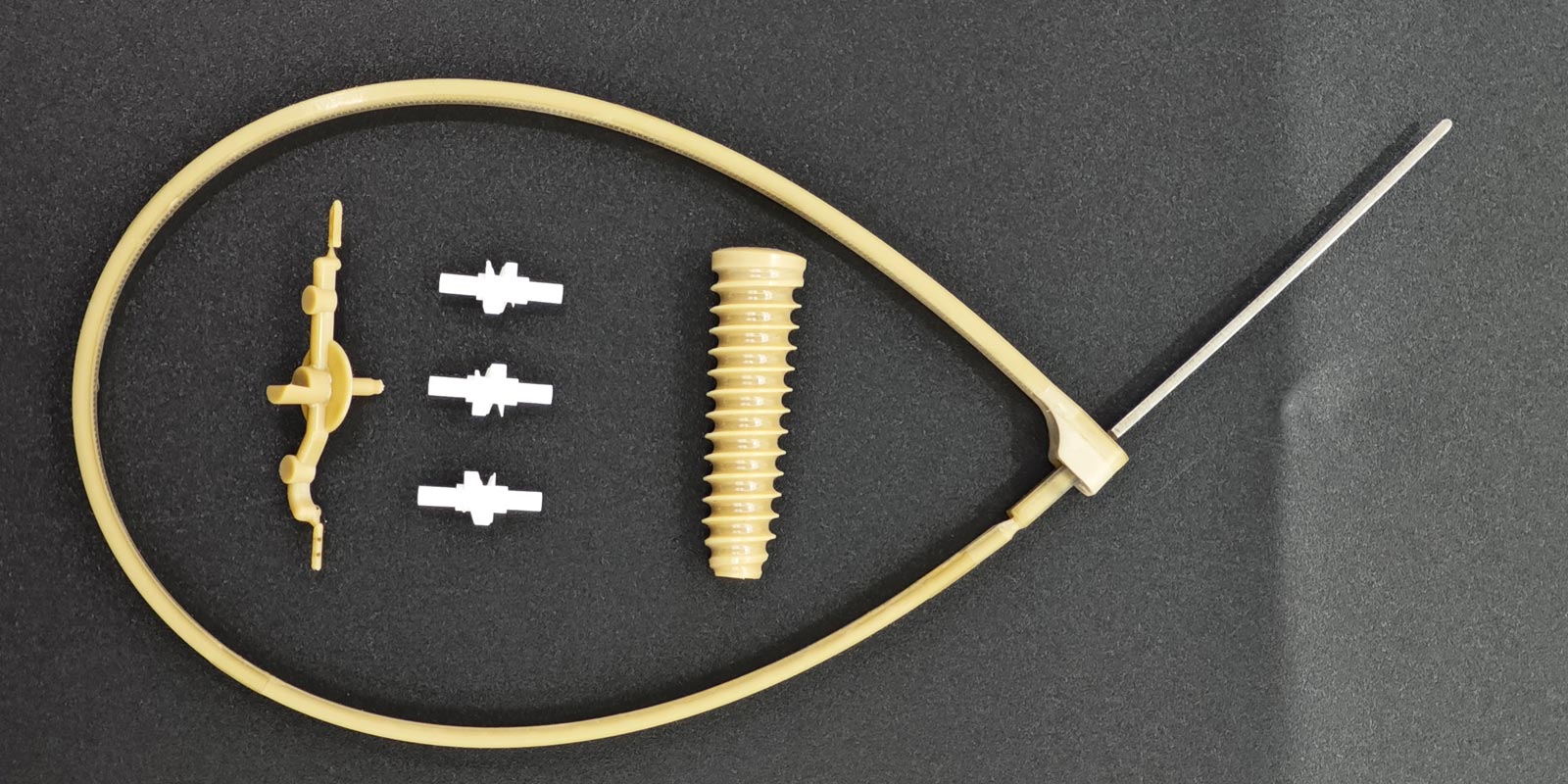
Environmentally friendly materials pose higher requirements for injection molding processes. Taking the manufacturing of PPSU (polyphenylsulfone) medical check valves as an example, this material needs to be molded at a high temperature of 320-380°C, and its hygroscopicity results in a very narrow processing window. Changzhou Ruilu Plastics Industry has controlled the material moisture content below 50 ppm through a multi-stage deep drying process. Combined with high-precision mold steel and an optimized gating system, the fit tolerance between the valve core and valve body reaches ±0.02 mm, ensuring smooth rotation and no leakage.
Two-color injection molding technology plays a key role in enhancing product functionality. An insulin injection pen developed by a company achieves both the rigidity of the pen body and the comfort of patient grip through secondary molding of the base material and soft TPE material, reducing medical accidents caused by operational errors.
-
System Integration of Energy-Saving Technologies
Green injection molding not only focuses on the materials themselves but also needs to reduce energy consumption through equipment upgrades and process optimization. Servo motor-driven injection molding machines can achieve on-demand oil supply, saving 40%-70% more energy than traditional hydraulic machines. Magnetic levitation air compressors reduce energy consumption of pneumatic components by 30% by reducing mechanical friction. Hot runner systems avoid the generation of runner cold material, reducing raw material waste and repeated plasticization energy consumption.
After introducing a carbon footprint tracking system, a medical packaging company reduced the carbon emissions of a single batch of medical device packaging by 38% through material substitution and process optimization. Its production line uses low-temperature water circulation utilization technology combined with an efficient drying hopper, improving energy utilization by 25%.
3. Green Transformation of the Industrial Chain Collaboration: From Single Products to System Solutions
-
Profound Changes in the Supply Chain
The application of environmentally friendly materials is driving the reconstruction of the supply chain. A sterilization service company in Shandong has established a closed-loop system of "material-sterilization-recycling." Through cooperation with PLA suppliers, it has developed a modified material compatible with ethylene oxide sterilization, increasing the recycling rate of packaging waste to 92%. Beijing Union Medical College Hospital has piloted a "packaging-recycling-composting" model, producing more than 15 tons of biofertilizer annually for hospital greening maintenance, forming a closed loop of resource recycling.
-
Global Alignment of Standards and Certifications
The environmental attributes of medical products need to pass strict certifications. The International Medical Device Regulators Forum (IMDRF) proposes that by 2030, medical device packaging should achieve 50% renewable material substitution. The EU's "Plastic Restriction Order" and the US FDA's guidelines on biodegradable materials are driving companies to accelerate the development of products that meet international standards. For example, the PHA dialysis packaging developed by a company has passed ISO 13485 medical quality management system certification and ISO 10993 biocompatibility evaluation, successfully entering the European and American markets.
4. Future Outlook: Technology Integration and Ecological Responsibility
-
Exploration of Smart Materials and Active Packaging
The Medical Innovation Laboratory at Stanford University is developing "active packaging" - biodegradable materials embedded with probiotics. This packaging can not only maintain a sterile environment but also repair soil after being discarded. This material decomposes through microbial metabolism, avoiding methane emissions during traditional composting processes and providing new ideas for carbon neutrality technology in medical packaging.
-
Integration of Personalized Medicine and Green Manufacturing
With the popularization of 3D printing technology in the medical field, the integration of environmentally friendly materials and personalized manufacturing will become a trend. For example, using a composite material of PLA and hydroxyapatite, personalized orthopedic implants with biological activity can be printed, meeting patients' personalized needs while achieving natural degradation of the material after surgery and reducing the risk of secondary surgery.
-
Global Industrial Chain Green Collaboration
By 2035, biodegradable packaging may cover 80% of Class I medical devices. Achieving this goal requires the collaborative efforts of multinational companies, research institutions, and policy makers. For example, by establishing a global medical plastic recycling alliance, unified classification standards and recycling processes can be established to solve regulatory barriers in cross-border transportation and promote the large-scale application of environmentally friendly materials.
Conclusion
The practice of environmentally friendly injection molding materials in the medical field is not only the result of technological innovation but also a commitment to ecological responsibility by the medical industry. From material research and development to process optimization, from supply chain reconstruction to standard setting, every aspect of green transformation is creating dual value for the health of the Earth and human well-being. As the World Health Organization said, "Medical health should not come at the expense of the Earth's health." This green revolution that started with packaging materials will ultimately reshape the sustainable development genes of the entire medical industry.






 Home
Home